Six years of experience do not necessarily make it easy for a developer to explain an architectural choice in an interview. A marketing specialist might have managed campaigns that delivered strong results yet forget the most relevant performance figures when asked about previous achievements.
These examples do not necessarily point to insufficient skills. During an interview, candidates must make sense of unexpected questions while recalling information and presenting their thoughts coherently under pressure.
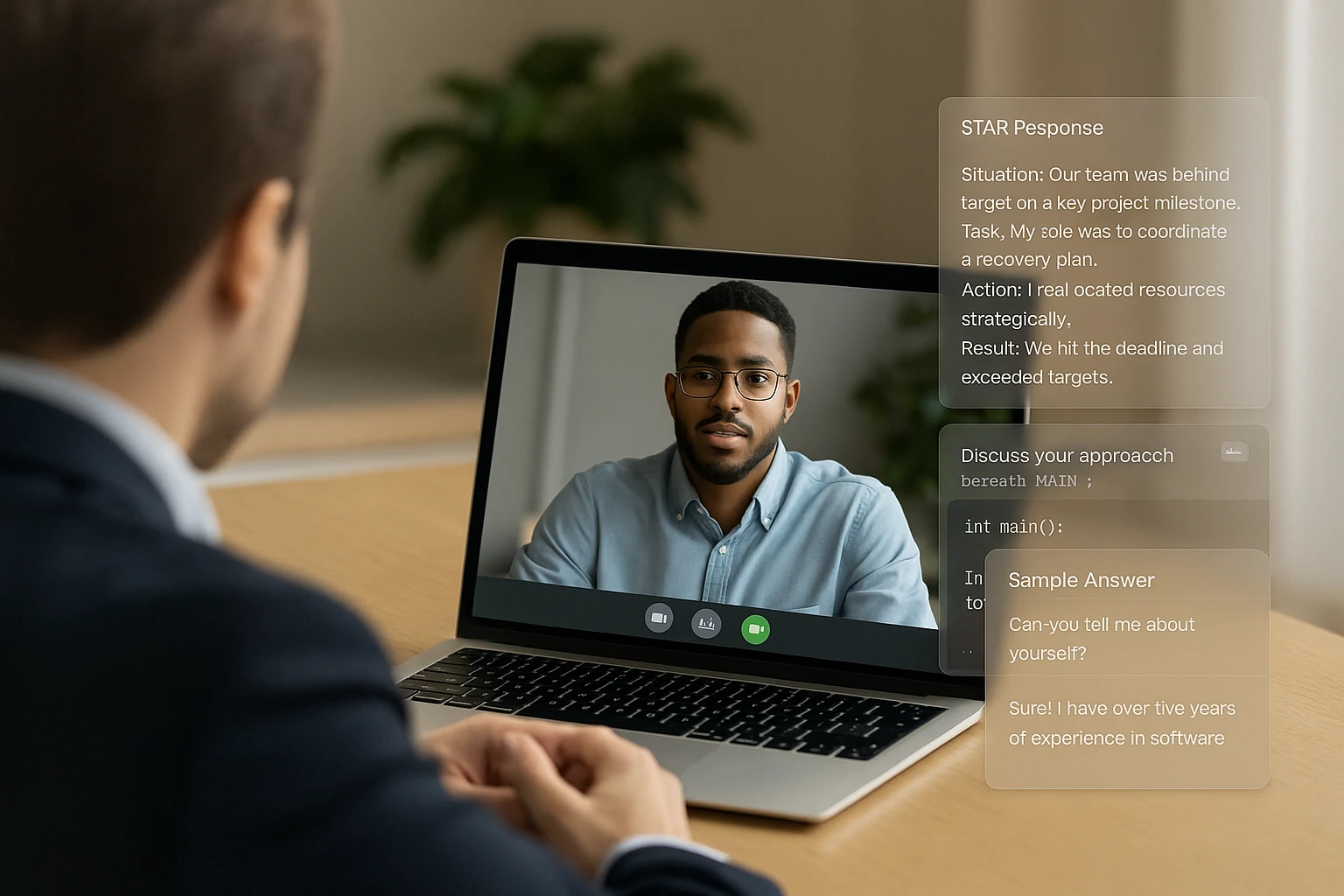
Candidates now have artificial intelligence tools for practicing these abilities. Through customized preparation, simulated interviews, and live response suggestions, Interview Pilot aims to help job seekers feel more confident in professional interviews.
Develop Your Professional Stories Before the Interview
Many candidates prepare in the conventional way by searching for frequently asked questions and learning sample answers by heart. Such stock responses seldom do justice to the particulars of a person’s real work history.
Take a common behavioral prompt: “Tell me about a time you managed a difficult project.” Starting confidently is useful, but the answer needs meaningful detail. A useful account connects the project’s context with the candidate’s contribution, their decisions, and the final outcome.
To make its suggestions more relevant, Interview Pilot incorporates details about the user’s CV, the intended job, and the prospective employer.
An AI interview assistant can help users identify experiences worth discussing, organize supporting details, and recognize gaps in their explanations. Users can subsequently practice explaining what actually happened in language that feels authentic to them.
Technical Knowledge Needs Clear Communication
An assessment of technical ability goes beyond knowing programming languages, software platforms, and engineering principles. Hiring teams often examine the way a candidate approaches a problem and compares possible solutions.
When discussing database optimization, a developer may be asked to describe how indexing improved query performance, the associated trade-offs, and the method used to measure the improvement.
Both technical questions and behavioral prompts are addressed through suggestions from Interview Pilot. Through its interview copilot functionality, the platform processes questions asked aloud and generates context-aware suggestions.
Candidates still need to comprehend the logic underlying a suggestion. Applicants need to be able to justify their technical choices without assistance, especially if an interviewer changes the initial scenario or asks follow-up questions.
Rehearse the Interview, Not Merely the Questions
Silent review of interview questions cannot fully replicate the demands of an oral response. Verbal rehearsal helps candidates notice communication problems that written practice might miss, such as starting with an overly long introduction, explaining ideas unclearly, or relying on unnecessary technical terminology.
Users can prepare for conversations with recruiters and hiring managers through Interview Pilot’s AI mock interview feature and interview question bank.
One practical exercise is to rehearse several versions of the same answer, each with a varying amount of information. The same experience could be explained in a thirty-second response during a screening interview and in greater depth during a technical discussion. Being able to vary an explanation helps candidates avoid sounding scripted while responding to the interviewer’s priorities.
Using Live AI Support With Professional Judgment
When candidates consider tools that provide real-time interview answers, they must also think about ethical conduct and what the employer expects. Some organizations permit AI assistance during assessments, while others require candidates to demonstrate their abilities without outside assistance.
Anyone searching for a copilot for interview preparation or live assistance should clarify the employer’s rules before using such technology during an actual interview. When an application processes interview dialogue, applicants must also pay attention to confidentiality obligations and consent. AI-generated suggestions are most valuable when they support genuine knowledge rather than replace real qualifications or invent professional experiences.
Finding Time for Consistent Interview Practice
Interview preparation often happens between professional obligations, commuting, and personal responsibilities. Support for multiple devices may make it easier to prepare on a regular basis.
Users can access Interview Pilot on Mac or Windows computers, on iPhone and Android, and via the web. Interview Pilot states that more than one million people worldwide use its service, which includes a free plan with a weekly AI usage allowance and paid subscriptions for unlimited usage.
The purpose of effective preparation is not simply to learn perfect wording. The aim is to feel at ease discussing what you understand, showing your reasoning, and communicating the contribution you could make to an organization.
Interview Pilot can help candidates develop these skills when used responsibly, with their actual career history, judgment, and ability to communicate remaining central to the interview.