A lift station can be a structure in the future which is stuffed with pumps, piping and valves, as well as controls and electrical devices, but the performance of the structure is established earlier. The design of the final lift station is determined by several factors such as flow calculations, elevations on the site, pressures in the system and wastewater characteristics, peak conditions accessibility to maintenance, control systems and future capacities.
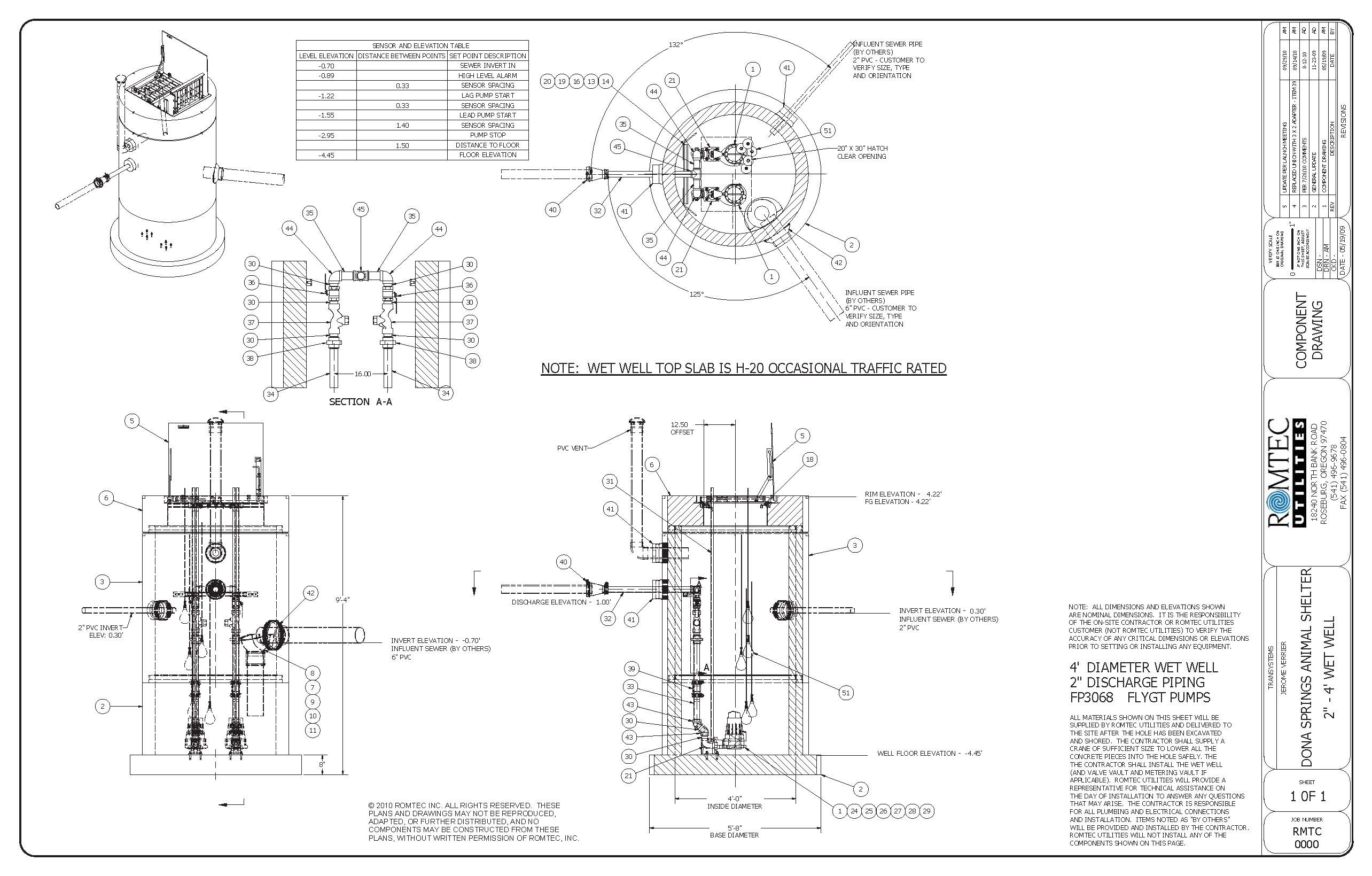
Image credit: romtecutilities.com
For project owners comparing the best lift station designers, the more useful question isn’t simply who can specify pumps. It’s not about who can design pumps, but rather, who is able to translate the location’s requirements and operating conditions into a system that’s feasible to build and operate as well as maintain.
Gravity has limits
Gravity is the most efficient means to transport wastewater. However the terrain and patterns of development aren’t always in the direction of this method. It’s possible that new industrial, residential and commercial properties are too large, far away or located in zones where gravity sewer expansion isn’t feasible.
A lift station can provide the force needed for the transfer of wastewater from one part of the collection system to another. The design of a lift station requires understanding both the normal and less favorable situations, for instance, peak inflows, pump maintenance, equipment failure, or any future growth in demand.
The top companies in wastewater design must analyze the entire problem rather than just focusing on the station.
Existing infrastructure makes the task More difficult
The construction of new buildings is not only an issue, but also the challenge of new construction. In addition to maintaining the essential infrastructure for wastewater, municipalities often need to replace or upgrade aging stations.
Existing wet wells, force mains electrical services, controls boundary lines for the site, as well as downstream infrastructure could limit the new design. Engineers must decide what is able to remain, and what must be replaced and how the new elements can be integrated into the existing system.
Romtec Utilities offers pumping solutions for municipal, private industrial, commercial and retrofit applications. Pumping systems can be designed to meet the particular requirements of each project.
Stormwater Has Different Rules
The most effective creators of stromwater systems utilizing the search terms provided must resolve a completely different hydraulic issue. Stormwater systems may experience drastic fluctuations in volume depending on the amount of rainfall, drainage capacity and discharge rates allowed.
A station serving a detention basin, for example it may be required to keep runoff temporarily and then pump it away at a controlled rate. Engineers should take into consideration the head and flow conditions, environmental requirements as well as flood management goals as well as the particulars of the receiving drain system.
Prefabrication Can Move Work Away from the worksite
The difficulty of field assembly could cause scheduling conflicts, errors in installation, change orders and delays. Romtec Utilities uses substantial prefabrication prior to equipment arriving at the construction site.
When you complete more assembly and quality control work within a controlled atmosphere this can decrease the amount of construction that is required in the ground. Based on the Romtec project approach, certain construction projects which would normally take weeks could be completed in just a few days, based on situation of the project.
The process of commissioning is crucial element to engineering Success
The placement of all components is not enough to make a system reliable. Romtec Utilities provides installation advisors and follows construction with startup, control-panel checks pumps, pump operation, system testing, as well as training for employees. The manual also contains information that the operators may refer to when are maintaining the system, or considering future expansion.
If you’re looking for the top lift station design, that final stage deserves attention. Engineering that is of high quality should yield more than just a satisfactory set of sketches. The station’s owner should be able to operate a well-functioning system, a trained personnel, a well-documented and useful equipment specifically designed for the environment that the station is expected to face during its daily operations.